Couteau de chef damas HOSHANHO 8 pouces
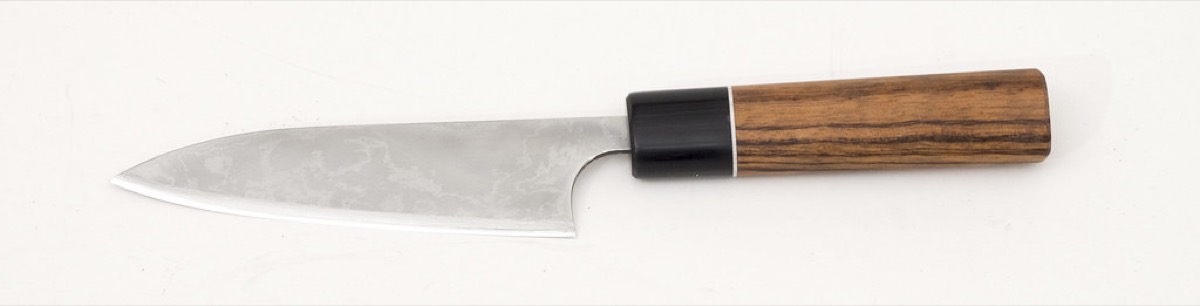
A Layered Chef's Knife Aimed At Home Cooks
The HOSHANHO 8 Inch Damascus Chef Knife sits in the increasingly crowded space of affordable, Japanese-inspired blades that pair a hardened cutting core with the flowing, layered Damascus surface pattern many cooks find irresistible. At eight inches, it lands on the classic gyuto footprint, long enough to rock through a pile of onions or slice a roast, yet still manageable on a standard cutting board. The manufacturer positions it as an everyday workhorse for home kitchens rather than a specialist tool, aiming to deliver the look and slicing feel of a premium knife at a distinctly more accessible price.
What draws most buyers in is the combination of visual drama and practical intent. The rippled Damascus cladding wraps a harder inner steel, so the pattern is more than decoration; it reflects a construction method meant to marry a keen, hard edge with a more forgiving, resilient body. Owners consistently report that the knife arrives strikingly sharp and looks far more expensive than it costs. For a cook curious about the Japanese gyuto style without committing to a boutique-priced blade, this HOSHANHO 8 Inch Damascus Chef Knife review frames it as a sensible, eye-catching first step.
Design And Standout Features
The centerpiece is the layered Damascus blade, in which many folds of steel are forged around a high-carbon cutting core. The manufacturer states this core is hardened well beyond typical soft stainless, which allows a thinner, more acute edge that bites cleanly into vegetables and proteins. The result is a blade profile with a gentle curve for rock-chopping and enough flat length for push cuts and slicing. The mirror-and-wave finish is the signature look, and while patterns like this are partly cosmetic, they signal the multi-layer approach that gives the knife its blend of sharpness and lateral strength.
Above the blade, the handle is typically a stabilized pakkawood-style composite, shaped for a secure, comfortable grip and resistant to moisture and warping. The balance is tuned to sit close to the bolster, which helps the knife feel nimble rather than nose-heavy during long prep sessions. A full or partial tang adds stability and a reassuring sense of solidity through the pinch grip. Taken together, the design borrows the visual and functional cues of much pricier Japanese cutlery, delivering a knife that feels considered in the hand and looks the part on a magnetic strip.
Who It Is For And Real-World Use
This blade suits the enthusiastic home cook who wants a single, capable chef's knife to handle the majority of daily tasks with a bit more finesse than a heavy German blade offers. It excels at the everyday choreography of dinner prep: fine-slicing shallots, cutting paper-thin ginger, breaking down a chicken into boneless portions, and cruising through mounds of vegetables. Because the edge is thin and hard, cooks who value clean, precise cuts and minimal crushing of delicate herbs or tomatoes tend to appreciate it most. It rewards good technique with genuinely satisfying performance.
It is also a natural gift or gateway knife for someone intrigued by Japanese cutlery. The dramatic Damascus pattern makes it feel special, while the price keeps the risk low. That said, it is best treated as a slicing and prep specialist rather than a do-everything brute. Owners report that it shines on boneless proteins and produce but should be kept away from bones, frozen food, and hard squash rinds that a tougher, softer blade would shrug off. Matched to the right tasks, it delivers a step up in the daily cutting experience.
Trade-Offs To Consider
The flip side of a hard, thin edge is fragility. A high-carbon Damascus core takes a superb edge but is more prone to chipping if it meets bone, a ceramic plate, or a glass cutting board, so it demands a softer wood or poly surface and a gentler hand. Buyers accustomed to prying, twisting, or hacking with a knife will need to adjust their habits. This is a precision instrument by design, and the same qualities that make it slice so cleanly also make it less tolerant of the abuse a budget stamped blade might survive.
There is also natural variation to expect in this affordable Damascus category. While many owners praise the out-of-box sharpness and finish, patterned budget knives can differ from unit to unit in edge geometry and polish, and the Damascus layering here is primarily a cladding aesthetic rather than a guarantee of exotic performance. It is a strong value, but it is fair to view it as a very good knife for the money rather than a rival to blades costing several times more. Realistic expectations keep the ownership experience a happy one.
Living With It And Care
Because the cutting core is high-carbon steel, care matters more than with a basic stainless knife. Hand-washing and immediate drying are essential; the dishwasher is off-limits, as heat, harsh detergent, and knocking against other items can dull, stain, or chip the edge. A quick wipe after cutting acidic foods like citrus or tomatoes helps keep the blade looking its best. Storing it in a sheath, on a magnetic bar, or in a slotted block, rather than loose in a drawer, protects both the delicate edge and your fingers, and preserves that mirror finish over years of use.
Sharpening is where the Japanese-style character asks a little more of the owner. The hard edge holds keenness impressively long, but when it does need attention, a whetstone is the ideal tool, since pull-through sharpeners can be too aggressive for a thin, hard bevel. Many owners find that learning to touch up the edge on a 1000-grit stone, followed by a finer finishing grit, becomes a rewarding ritual. Light stropping between sharpenings keeps it gliding. With that modest investment of care, the blade repays you with slicing performance that stays consistently crisp.
How It Compares And Where It Fits
Compared with a classic German chef's knife, the HOSHANHO trades heft and bombproof toughness for a thinner, harder, keener edge and a lighter feel, favoring precision over brute force. Against genuine boutique Japanese gyutos costing several times as much, it cannot match the pedigree of premium steels or hand-finishing, but it delivers a strikingly similar look and much of the everyday slicing satisfaction for a fraction of the outlay. Within the budget Damascus segment, it competes on sharpness, handle comfort, and that signature patterned finish that photographs beautifully.
Where it fits best is the kitchen of a curious home cook who wants to explore the Japanese chef's knife experience without a boutique budget. It is an excellent second knife alongside a tougher workhorse for rough jobs, or a confidence-building first Damascus blade for someone ready to learn edge care. As this HOSHANHO 8 Inch Damascus Chef Knife review has emphasized, treat it as a precise slicer, respect the hard edge, and it becomes a genuinely enjoyable daily driver that punches well above its modest price.
En un coup d'œil
Avantages
- Layered Damascus blade with a hard high-carbon core takes a keen, clean edge
- Classic 8-inch gyuto profile handles rocking, push cuts, and slicing with ease
- Ergonomic pakkawood-style handle balances near the bolster for nimble control
- Looks far more premium than its price and photographs beautifully on display
Inconvénients
- Hard, thin edge can chip on bone, frozen food, or hard ceramic and glass surfaces
- High-carbon core requires hand-washing, drying, and whetstone sharpening
- Budget Damascus units can vary in edge geometry and finish from piece to piece
Questions fréquemment posées
Is the Damascus pattern functional or just decorative?
It is both. The flowing pattern comes from many folded outer layers clad around a harder cutting core. The visual is largely cosmetic, but the layered construction pairs a keen edge with a more resilient blade body.
Can I put this knife in the dishwasher?
No. The high-carbon core needs hand-washing and prompt drying. Dishwasher heat, detergent, and jostling can dull, stain, or chip the thin edge, so a quick wash and towel-dry after use is the safe routine.
How should I sharpen it?
A whetstone is best for this hard, thin edge, starting around 1000 grit and finishing finer. Pull-through sharpeners can be too aggressive. Light stropping between sharpenings keeps the blade gliding cleanly.
Spécifications
| Blade Length | 8 inches (gyuto profile) |
| Blade Material | Damascus-clad high-carbon core |
| Blade Style | Japanese chef's knife (gyuto) |
| Handle Material | Stabilized pakkawood-style composite |
| Edge | Thin, acute, out-of-box sharp |
| Recommended Care | Hand-wash, dry, whetstone sharpen |
| Best For | Precise slicing of produce and boneless proteins |
| Avoid | Bones, frozen food, glass or ceramic boards |
Résumé
A striking, genuinely sharp gyuto-style blade that over-delivers on looks and slicing for the price, as long as you respect the hard edge with careful cutting surfaces and hand-washing.
Vérifier le prix sur Amazon